Observe before interpreting
Repetitive behaviors: how to understand them without judging
Repeating a movement, phrase, question, or arrangement may attract adults' attention. Yet repetition can serve very different functions from one child to another.
Describing it respectfully helps identify useful adjustments when it causes the child difficulty, instead of trying to eliminate it on principle.
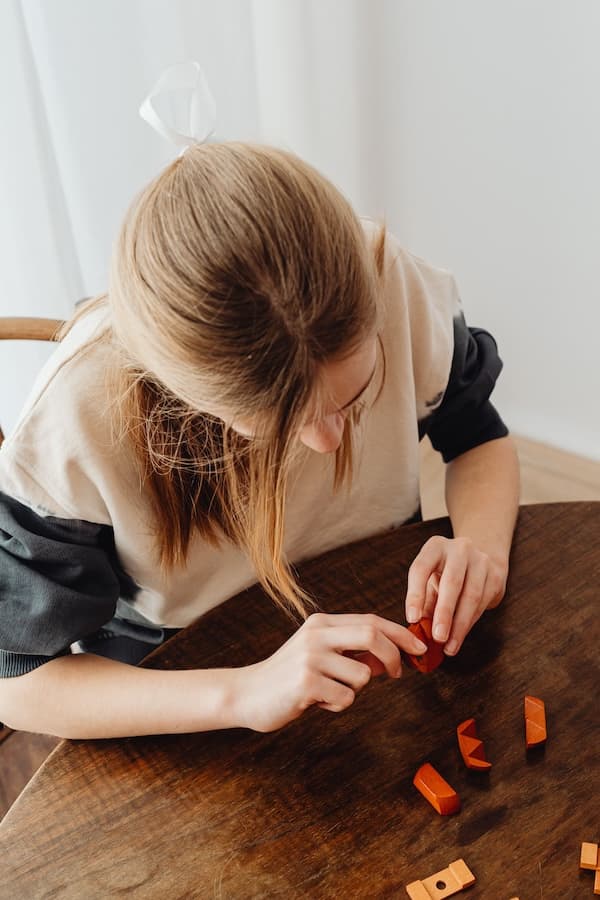
Repetitive behaviors
A repeated activity can have different meanings depending on enjoyment, context, and any impact it has.
What you can record
A useful example includes the setting, time, visible behavior, what comes before it, and what follows. It may also help to understand whether the child finds enjoyment, information, reassurance, or a way to participate through it.
Some repetition is an ordinary part of development. Other forms warrant advice when they become painful, dangerous, very intrusive, or associated with distress.
Keep different explanations distinct
A tic, compulsion, habit, self-regulation strategy, or repetition related to communication calls for different responses. An online guide cannot distinguish between them.
If questions persist, descriptions of specific situations will help the professional and family explore what is most relevant.
Different forms: movements, words, play, and arrangements
Repetition can involve hand movements, rocking, a phrase, a question, a sequence of words, a way of playing, seeking a particular arrangement, or reviewing the same information. Its form alone does not reveal its meaning. One repeated activity may be joyful and freely chosen, while another appears mainly during stress or a difficult wait.
For young children, play and learning often involve repetition. Adolescents may also have checking habits, frequently revisited topics, or subtle regulating movements. It is better to ask when this happens, whether the child enjoys it, whether they can stop when they want to, and what happens if someone interrupts.
- Describe the exact movement, words, or activity.
- Record the setting, time, and preceding events.
- Distinguish what feels enjoyable from what seems hard to control.
Explore possible functions without deciding for the child
Repetition can help with concentration, waiting, remembering, expressing emotion, obtaining reliable information, or feeling calmer. It can also serve a social function: sharing a favorite phrase, inviting someone into a familiar world, or checking that the other person understood. Observers can suggest possibilities, but sometimes only the child can describe their experience.
Where possible, an open question can tell you more than a prohibition: ‘Does that help you?’, ‘Does it feel good or bother you?’, ‘Would you like us to find another way to do this here?’ Some responses will be nonverbal or remain unknown; that does not justify concluding that the child is doing it deliberately or to provoke someone.
- Accept the child's response, including when they cannot explain it.
- Observe whether repetition increases during waits, noise, or changes.
- Avoid removing a source of support before understanding its role.
Similarities that do not settle the question
Some tics, compulsions, learning habits, anxiety-related behaviors, or regulating movements can look repetitive. Yet they have different meanings and may require different responses. Intrusive thoughts, a specific fear, pain, rapid changes, or an irresistible urge cannot be assessed from a simple online description.
It is therefore better not to use a guide to distinguish a tic, obsessive-compulsive disorder, learned behavior, or an autistic characteristic. Families with questions can bring a factual description to their doctor or the relevant professional: how long it has been happening, how often, under what circumstances, and how it affects the child.
- Do not ask the child to justify themselves in front of others.
- Seek advice if the situation becomes painful, dangerous, or very intrusive.
- Protect the young person's privacy, especially in adolescence.
Respect the child while protecting their comfort and safety
A behavior that harms no one does not always need correction. However, it may help to consider another way to regulate in a setting where the movement becomes uncomfortable for the child, attracts teasing, or conflicts with a safety requirement. Alternatives should be explored with the child, without shame or punishment.
Sometimes the environment can be adjusted before asking the child to change: shorten a wait, offer something to handle, clarify information, allow a break, or provide a quiet space. These are practical trials, not evidence about autism. Their value lies in how they help everyday life, not whether they meet a norm.
- Favor a discreet alternative chosen by the child when they want one.
- Avoid humiliating comments or demands for constant control.
- Ask the child what they think of the proposed support.
When additional support may help
Repetition deserves particular attention when it prevents a child from sleeping, eating, learning, playing, or moving around as they wish, causes injuries, or comes with substantial distress. The family can record a few examples and seek advice. The need for help depends on comfort, safety, and the observed impact, not on an existing diagnosis.
A professional can help explore possible causes and choose an appropriate response. The aim is not to eliminate every individual difference, but to reduce distress or obstacles and support the child's choices. This may also involve questions about sleep, health, pain, anxiety, or relationships.
- Prepare simple examples rather than an overall interpretation.
- Signaler tout changement soudain ou toute mise en danger.
- Include successes and familiar calming strategies.
Repeated phrases, repeated questions, and echolalia: context matters
Repeating an overheard phrase, movie line, question, or part of a conversation can serve several purposes. The child may enjoy the sound, hold information in mind, practice responding, seek reassurance, or use a familiar phrase to communicate something hard to put into words. The same utterance can therefore mean different things at different times.
Echolalia is a term for repeating words or phrases. On its own, it does not tell us whether the child understands. In some situations, it can be part of learning or communication. In others, it may reflect overload, waiting, or an unanswered question. Observing the other person's reaction and how the exchange unfolds is often more useful than trying to eliminate it.
An adult can respond clearly, gently rephrase, or offer a concrete choice if that seems helpful. It is better to avoid teasing, demands to ‘speak normally,’ or automatically interpreting repetition as provocation. If language or communication raises lasting concerns, a qualified professional can help explore them.
- Explore what the repetition seems to make possible in that situation.
- Respond to the possible need, not just the form of the sentence.
- Seek advice if the child can no longer make themselves understood or is distressed by the situation.
Adjust the context before asking for control
In a line, a noisy room, or a long transition, handling an object, moving, or repeating a phrase may help the child stay engaged. Before asking them to stop, adults can consider whether the situation could be made more manageable: clear information, a shorter wait, an allowed object, a chance to move, or a discreet break.
When the behavior genuinely interferes with an activity, the child can help find an alternative. It should be practical, respectful, and avoid requiring them to hide a difficulty constantly. Different solutions at home, school, or on public transportation are possible; the context often shapes the adjustment more than the behavior itself.
If repetition becomes very intrusive, painful, or dangerous, the cautious response is to seek advice rather than add more prohibitions. Health, pain, stress, or sleep can change the situation quickly and deserve consideration.
- Adjust an environmental demand where possible.
- Develop an alternative with the child, not against them.
- Do not delay medical advice if there is pain, injury, or a sudden change.
Cereya Child Autism Test
A tool for describing situations without labeling the child
The Cereya questionnaire helps organize everyday observations from the past three months.
It neither confirms nor rules out ASD. It can support a conversation with the child, school, or a professional when that seems useful.
- a questionnaire completed with a parent or legal guardian
- room for the child's perspective, depending on their age
- observations organized by setting and area
- descriptive feedback, without a diagnosis
Initial summary included, with detailed analysis available afterward.
Repetitive behaviors
A repeated activity can have different meanings depending on enjoyment, context, and any impact it has.
FAQ
Frequently Asked Questions
Does repetitive behavior mean a child is autistic?+
Not necessarily. A movement, repeated phrase, or way of playing may relate to enjoyment, learning, regulation, stress, a tic, or other factors. Context and function matter.
How can we discuss it without judgment?+
You can ask what the behavior does for the child, when it occurs, what happens when it is interrupted, and whether it actually affects their safety, comfort, or participation.
Should we stop a repetitive movement?+
Not automatically. Before intervening, it helps to consider what the movement does for the child and whether it causes pain, danger, significant difficulty, or distress they express. A respectful response starts by seeking to understand and, if needed, finding an alternative together.
Are tics and repetitive behaviors the same thing?+
No. They can sometimes look similar to an observer, but the experience, course, and support needed may differ. A persistent, painful, or concerning issue deserves discussion with the professional caring for the child rather than interpretation from a distance.
Does repeating a question mean the child does not understand?+
Not necessarily. Repetition can help check information, provide reassurance, sustain an exchange, support memory, ask for time, or express a worry. The most useful response depends on the situation, the wording, and what the child seems to be seeking.
When should we seek advice?+
Advice may help if a behavior hurts, puts the child at risk, involves substantial distress, persistently prevents important activities, or changes rapidly. It is also worth discussing when its function is unclear and the situation affects everyday life.
References and resources
This guidance is an educational synthesis of the recommendations and research cited below. It does not reproduce clinical criteria, tools, or protocols.
- Haute Autorité de Santé (2026) — Autism: new recommendations for infants, children, and adolescents.
- Haute Autorité de Santé (2026) — ASD: interventions and life pathways for infants, children, and adolescents.
- NICE CG128 — Autism spectrum disorder in under 19s: recognition, referral and diagnosis.
- Hyman, S. L., Levy, S. E. & Myers, S. M. (2020). Identification, Evaluation, and Management of Children With Autism Spectrum Disorder. Pediatrics, 145(1), e20193447. DOI: 10.1542/peds.2019-3447. PMID: 31843864.
- World Health Organization — ICD-11: autism spectrum disorder, classification framework.
- Leekam, S. R., Prior, M. R. & Uljarevic, M. (2011). Restricted and repetitive behaviors in autism spectrum disorders: A review of research in the last decade. Psychological Bulletin, 137(4), 562–593. DOI: 10.1037/a0023341. PMID: 21574682.