After school
Fatigue and recovery after school
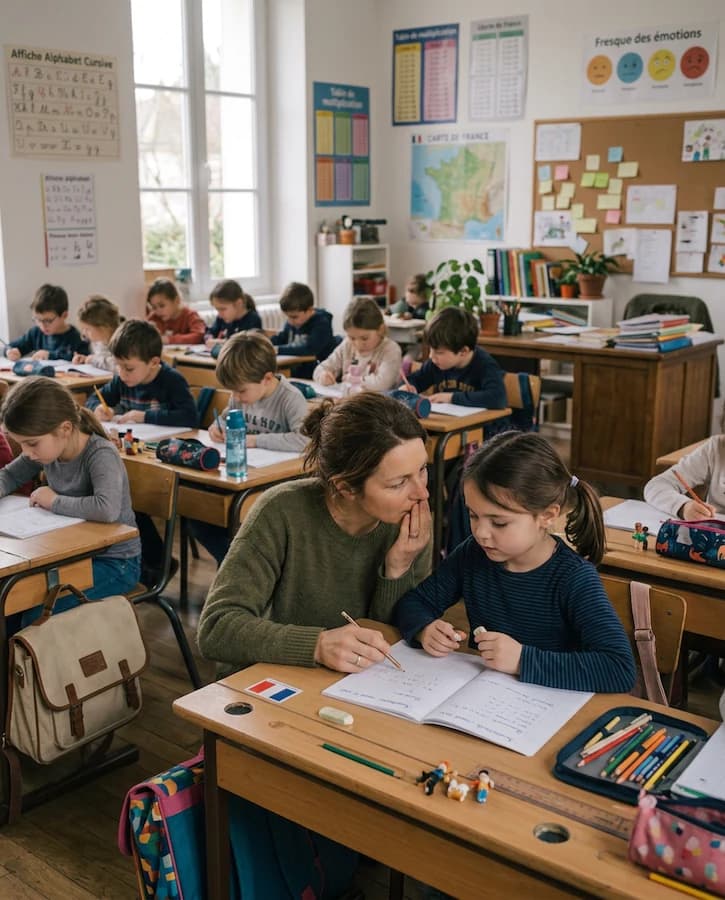
Some children need quiet, time alone, or a particular routine after school. Others seem to manage all day, then react strongly once home.
These observations can help adjust family routines, but alone they cannot tell us what the child experienced or explain the cause of their fatigue.
Fatigue and recovery
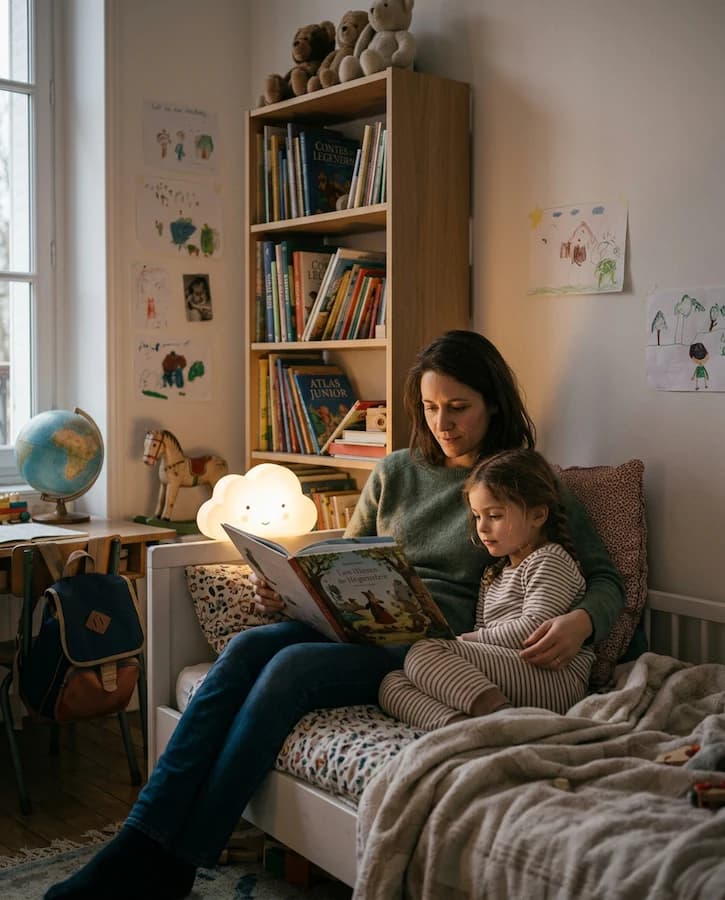
Recovery time is part of daily life and can look different for each child.
Make observations concrete
Look for difficulties after particular days, places, or events: tests, group work, sports, lunch, travel, or schedule changes. Sleep, health, and meals also need consideration.
A need to withdraw is not rejection of the family. It can be a way to recover, while the child should still be able to maintain connections and activities that feel good.
Plan realistic recovery time
A calmer return home, a snack, a chosen activity, later homework, or a quiet space may help. Adjust these with the child rather than imposing them as a universal rule.
If fatigue strongly affects health, learning, mood, or relationships, it may help to discuss it with the doctor, school, or relevant professionals.
A day can combine many demands
After-school fatigue does not come from a single source. Learning, travel, noise, social expectations, instructions, classroom changes, lunch, sports, tests, possible conflicts, and long periods without a genuinely chosen break can all contribute. This buildup varies by day, class, sleep, and health.
For some young people, a predictable day and a secure relationship with an adult greatly reduce demands. For others, a particular school task, group activity, or journey can disrupt the end of the day. The aim is not to calculate an invisible amount of effort, but to understand which moments seem to demand more resources and which supports preserve balance.
- Look at the whole day, including travel and evening activities.
- Identify easier days and what makes them different.
- Do not automatically attribute all fatigue to autism.
Observable signals without guessing the inner experience
Fatigue may appear as a need for silence, withdrawal, brief answers, irritability, crying, restlessness, difficulty starting homework, early sleep, or instead a need to move. The same behavior can have other explanations. Put it in context: is it new, linked to particular days, preceded by an event, or improved by a break?
Not all children have words for how they feel. A simple question, picture choices, a written message, or permission to answer later can open a conversation. Some do not want to discuss school immediately after getting home. Respecting that pace does not ignore a difficulty; it means choosing a moment when the child has more capacity.
- Describe what is visible without concluding that the child ‘made an effort’ or ‘held it together.’
- Ask what would help now rather than demanding an immediate explanation.
- Record unusual or intensifying signs.
Distinguish ordinary tiredness from an impact that takes over
Being tired after school is common. The question becomes more significant when recovery takes up the whole evening, the child regularly gives up things they enjoy, conflicts become daily, sleep worsens, or distress is expressed. The impact may also appear on weekends, in family availability, relationships, or school refusal.
There is no single cutoff for this distinction. It depends on the child's rhythm, age, health, activities, and priorities. Exams, a school change, infection, bullying, or a learning difficulty can alter fatigue abruptly. These possibilities should be explored carefully.
- Ask what the child can no longer do or no longer wants to do.
- Look at duration and changes over time rather than one difficult evening.
- Seek advice if fatigue comes with concerning health signs or distress.
Organize recovery without making evenings unmanageable
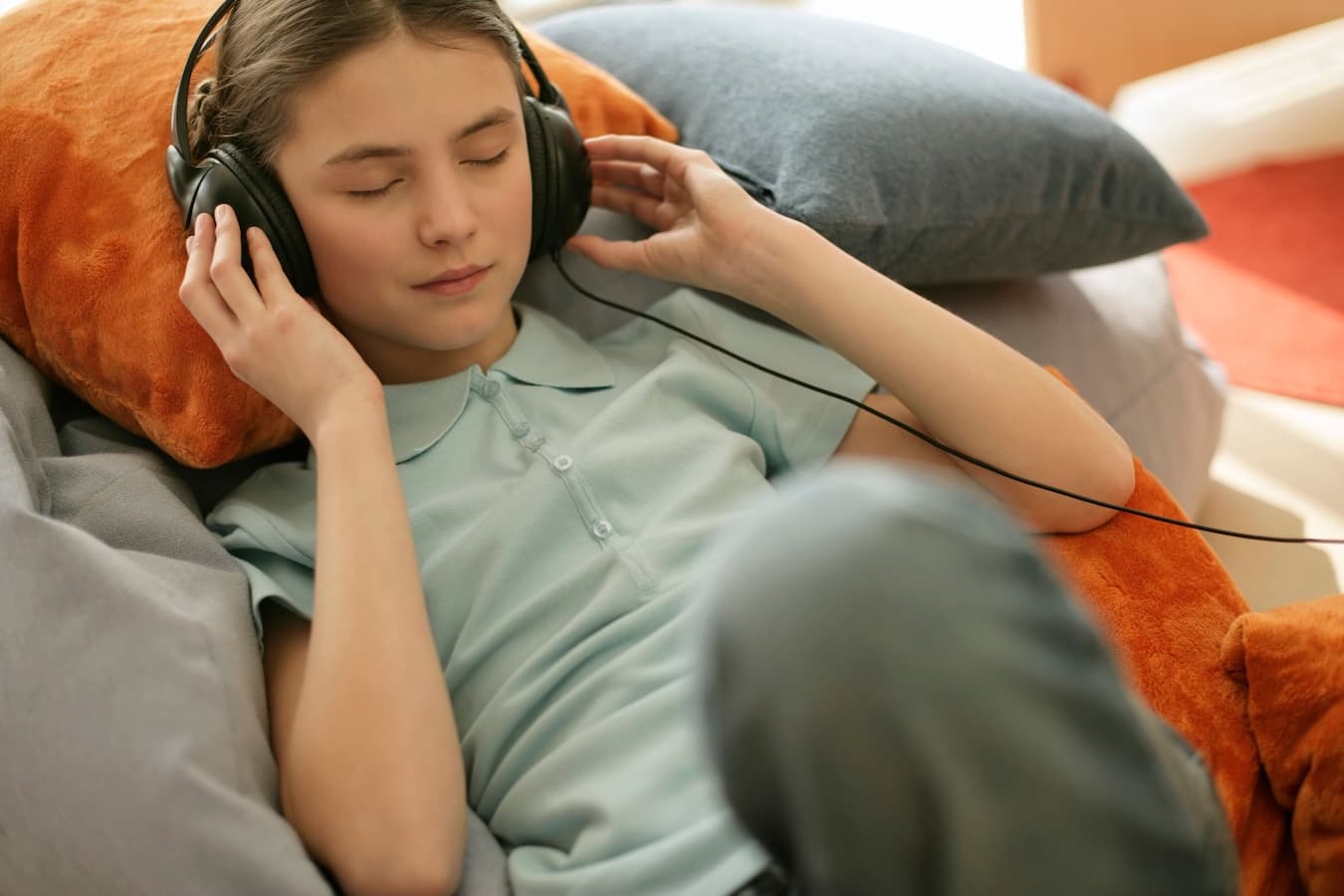
Quiet time, a snack, chosen physical activity, screen time with boundaries, a familiar game, music, a shower, or doing nothing may help different children. There is no universal ritual. Recovery time should not become a punishment or another obligation, and it should remain compatible with family needs.
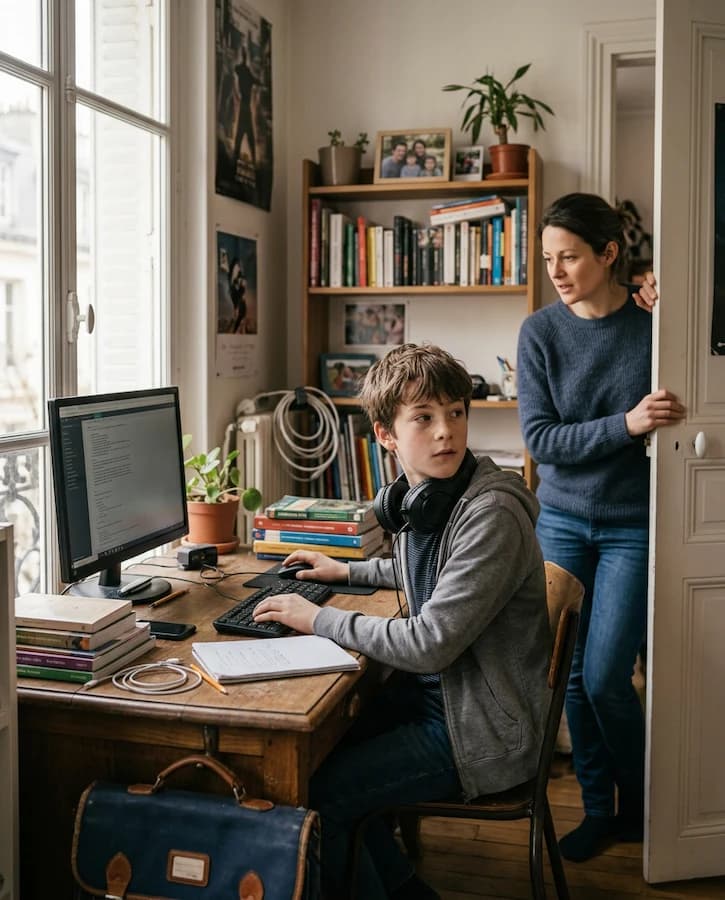
A realistic sequence may help: arrive home, take a break, then do homework or an activity. Some find homework easier before dinner; others need a short break first. Adjustments can be tried and reviewed. A flexible routine can provide security without preventing family participation or changes in habits.
- Choose one or two ways to recover with the child.
- Plan a transition between school and evening demands.
- Avoid treating fatigue as unwillingness.
Connect family, school, and healthcare when needed
If fatigue persists, the family can share a few facts with the school: affected days, difficult moments, recent changes, sleep quality, the child's feedback, and what improves the evening. The team can then share observations without being asked to diagnose. Together, adults can choose a realistic approach to try and plan when to review it.
A doctor or pediatrician can also help when fatigue is substantial, new, associated with sleep, eating, mood, or pain problems, or accompanied by reduced functioning. Fatigue is a signal to understand as a whole. It can coexist with neurodevelopmental differences without identifying them on its own.
- Keep a few examples of contrasting days.
- Ask for support suited to the situation rather than a quick explanation.
- Include the child's voice and priorities where possible.
Sleep, health, and daily rhythms: school does not explain everything
Sleep, infection, pain, medication, hormonal changes in adolescence, food, travel, or a difficult family period can affect a child's capacity. New or unusual fatigue should not be reduced to an expected consequence of schooling or a possible neurodevelopmental profile. Health questions belong in the conversation with a doctor or pediatrician.
Simple notes about bedtime, waking, nights, sleepy periods, and easier days can help describe the situation without becoming home medical monitoring. It may also help to observe whether a late activity, lengthy homework, sports practice, or screen use actually changes the next day rather than assuming a single cause.
Sleep and recovery needs change with age. An adolescent may have a different rhythm from the adults in the family, while still being able to discuss conditions that protect health. A respectful conversation about routines is often more productive than a daily struggle over evening behavior.
- Tell the professional about significant or unusual changes in fatigue.
- Observe the pattern over several days rather than one night.
- Avoid making the child responsible for fatigue they cannot control.
Protect weekends and family life
When the whole week is packed, weekends may become the only recovery time. Some children want to stay home; others need movement or a particular interest. There is no universally right schedule. Balance means protecting rest without systematically removing activities that matter to the child and family.
Siblings, outings, family meals, and parents' responsibilities also shape planning. Simple plans can reduce surprises: choose a priority activity, set a return time, keep quiet time after an event, or agree to shorten an outing. These choices can be discussed without presenting the child as an obstacle to family life.
If recovery needs create constant conflict or concerning isolation, discussing them with a professional may help. The aim is not to fill free time at any cost, but to help the child find a rhythm that restores energy, safe relationships, and activities that feel good.
- Allow recovery time after demanding days or events.
- Include the child's preferences in family choices.
- Do not equate rest needs, avoidance, and unwillingness without exploring context.
Cereya Child Autism Test
A tool for describing situations without labeling the child
The Cereya questionnaire helps organize everyday observations from the past three months.
It neither confirms nor rules out ASD. It can support a conversation with the child, school, or a professional when that seems useful.
- a questionnaire completed with a parent or legal guardian
- room for the child's perspective, depending on their age
- observations organized by setting and area
- descriptive feedback, without a diagnosis
Initial summary included, with detailed analysis available afterward.
Fatigue and recovery
Recovery time is part of daily life and can look different for each child.
FAQ
Frequently Asked Questions
Does substantial after-school fatigue indicate autism?+
Not necessarily. Fatigue may relate to the school day, sleep, travel, anxiety, learning, noise, or many other factors. It deserves attention without being treated as proof.
What can we record?+
Noting the timing, days involved, visible signs, and what supports recovery may help. A significant or lasting change deserves discussion with people who know the child.
Is after-school fatigue always concerning?+
No. Many children are tired after a day in class. Further exploration may help when fatigue is very frequent or intense, persistently prevents important activities, comes with distress, or seems to worsen. Sleep, health, and the school setting also belong in the discussion.
Why might a child say nothing when they get home?+
They may need to recover, not know where to begin, fear disappointing someone, prefer another time, or not have noticed what was difficult. Quiet company and a question later can work better than an immediate request for a full account.
Does a good school day rule out substantial fatigue?+
No. Visible success and felt effort do not always match. A child may have participated, learned, and followed expectations while still needing considerable recovery afterward. The reverse is also possible: a difficult day does not reveal everything about their overall state.
How can we discuss fatigue with the school?+
Dated examples help: schedules, travel, homework, changes, noise, group activities, behavior on returning home, and what supports recovery. The school can add its observations. This dialogue aims to understand the child's rhythm, not assign a clinical cause.
References and resources
This guidance is an educational synthesis of the recommendations and research cited below. It does not reproduce clinical criteria, tools, or protocols.
- Haute Autorité de Santé (2026) — Autism: new recommendations for infants, children, and adolescents.
- Haute Autorité de Santé (2026) — ASD: interventions and life pathways for infants, children, and adolescents.
- French Ministry of National Education — Schooling for students with special educational needs.
- éduscol — Schooling for students with autism spectrum disorder.
- Díaz-Román, A., Zhang, J., Delorme, R., Beggiato, A. & Cortese, S. (2018). Sleep in youth with autism spectrum disorders: systematic review and meta-analysis of subjective and objective studies. Evidence-Based Mental Health, 21(4), 146–154. DOI: 10.1136/ebmental-2018-300037. PMID: 30361331.