Preparing for a discussion
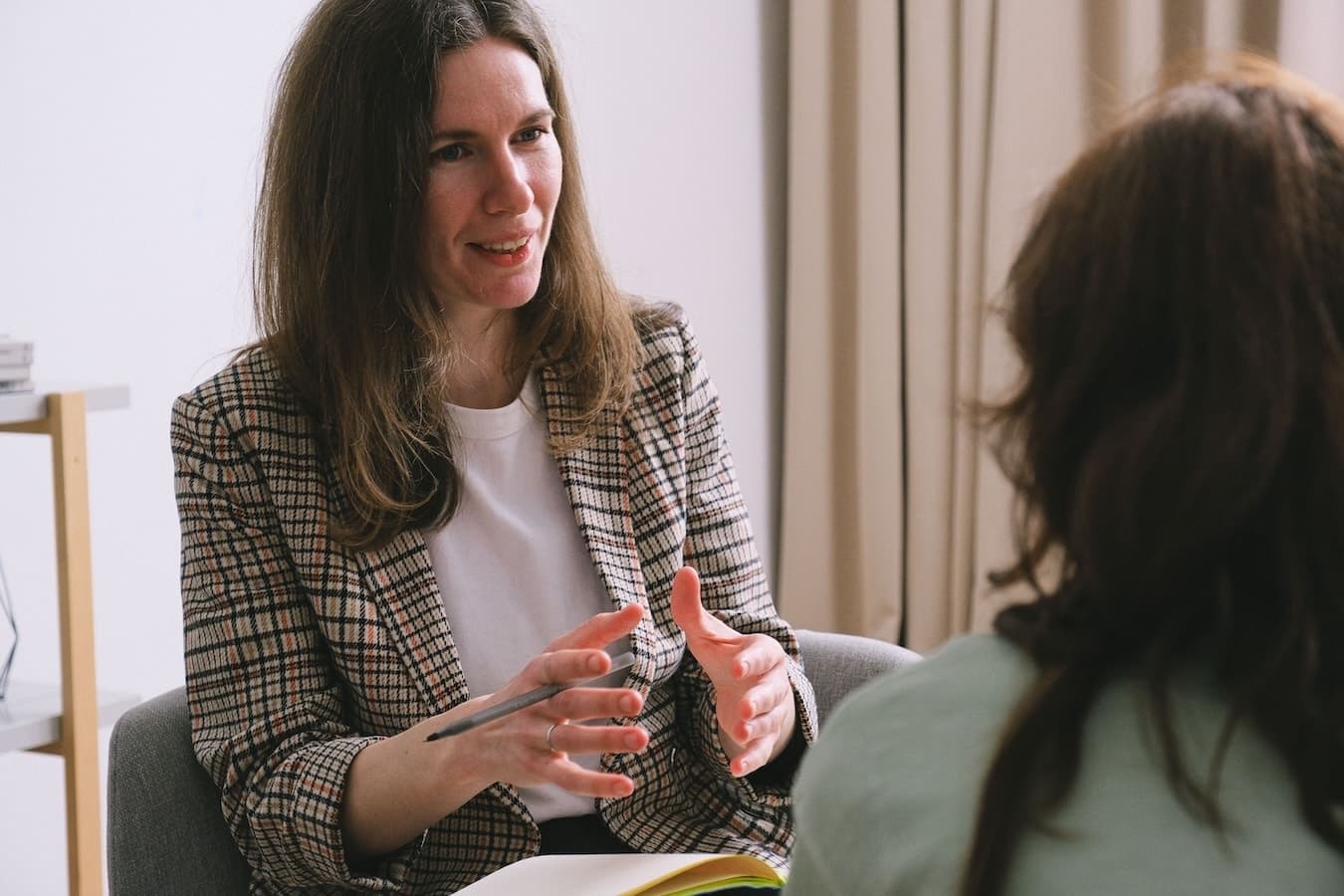
How to discuss your observations with a professional
You do not need to arrive with a conclusion to discuss your child. A few precise examples can already make the consultation clearer and less stressful.
Professionals have different roles: a primary care doctor or pediatrician, psychologist, child psychiatrist, pediatric neurologist as appropriate, speech-language pathologist, occupational therapist, psychomotor therapist, or school team may contribute in complementary ways.

Preparing for a conversation
Sharing concrete observations can help prepare for a conversation with a professional.
Prepare a few everyday situations
It may help to record what happens, where, who is present, what comes before it, the visible response, approximate frequency, and what helps. The child's successes, interests, and resources matter just as much.
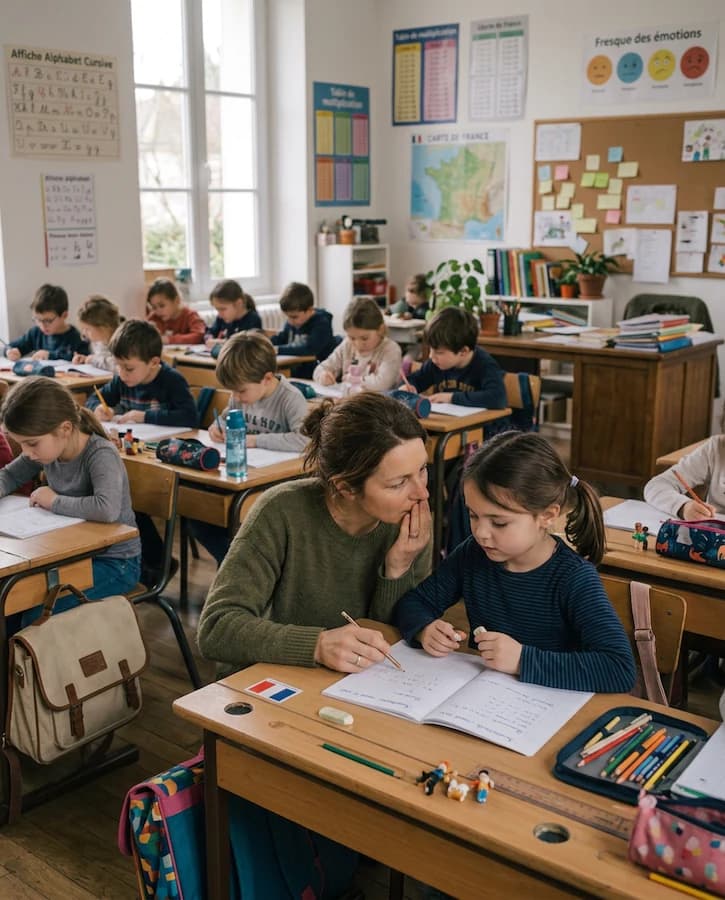
If school is involved, an example from the team can complement one from home. Adults do not need to agree on everything.
Ask open questions
You can ask which possibilities deserve exploration, what information would help, and who can support the identified needs. No professional should be presented as equally mandatory in every situation.
For substantial distress, danger, or a sudden behavioral change, promptly contact healthcare professionals or emergency services appropriate to your situation.
Prepare a few situations rather than a perfect file
Before an appointment, three or four concrete situations are often enough: a conversation with peers, a difficult transition, a meal, returning from school, an instruction, or a particular sensation. For each, record the setting, frequency, preceding events, what the child said or showed, consequences, and what helped. Strengths and easier moments are equally useful.
You do not need to categorize situations or prove a hypothesis yourself. Words such as ‘always,’ ‘never,’ or ‘that's how they are’ sometimes convey less than a detailed example. A professional can ask about missing information and, if needed, suggest other sources or targeted assessments.
- How long has the situation been observed?
- In which settings is it more or less apparent?
- What concrete impact and sources of support do you see?
Bring useful documents without overwhelming the conversation
A school report, teacher examples, an existing assessment, or a few personal notes may help clarify a situation. There is no need to print all the child's work or create an exhaustive timeline. The aim is to provide an overview and be able to find an example if the professional asks a specific question.
School, child, and family accounts do not need to match. Differences may show that an environment is more structured, noisy, demanding, or reassuring. Professionals generally seek to understand how these contexts fit together rather than treating one account as the sole truth about the child's functioning.
- Choose documents that answer a concrete question.
- Ask the young person's agreement before sharing personal work where possible.
- Give the date and context of older observations.
Make space for the child's or adolescent's voice
A child's experience may differ from what adults see: they may enjoy a group yet find it exhausting, describe a noise as painful while appearing calm, or not want to discuss something in front of parents. They may also lack words to answer. Both are valid. A professional experienced with young people can adapt how they gather the child's perspective.
Preparing a child does not mean rehearsing an answer. Explain who will attend, how long it may take, that breaks can be requested, and that they need not become an expert on themselves. With adolescents, confidentiality and its limits should be clearly explained, particularly when safety is at risk.
- Explain the appointment's purpose to the child in simple words.
- Let them choose an example or way to express themselves.
- Respect refusal to answer a nonurgent question.
Understand possible roles without imposing a single pathway
A doctor or pediatrician can hear initial concerns, check health factors, and make referrals. A psychologist, child psychiatrist, or pediatric neurologist may contribute according to needs and local pathways. A speech-language pathologist can explore language and communication when relevant; an occupational or psychomotor therapist may address participation, movement, or regulation within their scope.
This list is not a mandatory itinerary. Guidelines emphasize a coordinated approach tailored to the child, not accumulating assessments. The useful question is: what information or support would help now? The professional meeting the family can help prioritize, considering the French context and local resources.
- Ask the purpose of each proposed referral.
- Avoid accumulating appointments without knowing what they should contribute.
- Keep a simple record of decisions and remaining questions.
After the appointment: clarify next steps and stay grounded in everyday life
At the end of a conversation, it may help to restate what was understood, what to observe, whom to contact, and the proposed follow-up timeframe. Families can ask for explanations of unfamiliar terms or referrals. Care or assessment pathways may involve waiting; that does not prevent reasonable adjustments with school and family around needs already apparent.
Next steps should not put everyday life on hold. Protecting sleep, safe relationships, favorite activities, recovery, and accessible learning remains important. A Cereya report can serve as a record of observations, but it does not replace dialogue with people who truly know and support the child.
- Record next steps and whom to contact again.
- Distinguish what can be tried now from what needs specialist advice.
- Return to the professional if the situation changes or becomes more concerning.
While waiting: keep supporting everyday life
Appointment or assessment waits can be long. Families do not need to pause everything. Already identified needs—clearer instructions, protecting sleep, easing a transition, preventing bullying, supporting a meal or the return from school—can be discussed with relevant adults without waiting for a diagnostic conclusion.
A single short list can help: important situations, appointments requested, responses received, and remaining questions. It avoids rebuilding the story for each contact. It may also reduce parents' emotional load: they need not coordinate every piece of information or repeat details in front of the child that the child does not want to hear.
If the situation worsens while waiting—substantial distress, danger, sudden changes, marked school refusal, bullying, or a health problem—contact the appropriate people again rather than waiting for the original appointment. The young person's immediate safety and well-being come first.
- Keep a simple record of steps taken without constantly monitoring the child.
- Put already relevant everyday support in place.
- Contact a professional again if the level of concern changes.
Understand proposals and retain a say in decisions
Families can ask what an assessment is for, who will conduct it, what information will be gathered, how it will be shared, and what comes next. Children and adolescents may also need to know what will be told to school or other adults. Accessible explanations are part of a respectful process.
It is possible not to understand a proposal immediately or to want time to think. Parents can ask for rephrasing, check contact details, ask about possible fees, or seek a local guidance resource. This does not challenge the professional; it supports informed decisions suited to the family.
Useful information does not replace the young person's consent and participation. Depending on age and maturity, they can express preferences about how they are discussed, who is present, or the pace of an appointment. Adults retain protective responsibilities while explaining clearly what is decided and why.
- Ask for a clear explanation of each proposed step.
- Prepare the child's questions as well as the parents'.
- Check what will be shared with school or other services.
Cereya Child Autism Test
A tool for describing situations without labeling the child
The Cereya questionnaire helps organize everyday observations from the past three months.
It neither confirms nor rules out ASD. It can support a conversation with the child, school, or a professional when that seems useful.
- a questionnaire completed with a parent or legal guardian
- room for the child's perspective, depending on their age
- observations organized by setting and area
- descriptive feedback, without a diagnosis
Initial summary included, with detailed analysis available afterward.
Preparing for a conversation
Sharing concrete observations can help prepare for a conversation with a professional.
FAQ
Frequently Asked Questions
Whom can we speak to first?+
A primary care doctor or pediatrician can be a first contact. Depending on the situation, they may suggest a referral or gather more information. The exact pathway differs between families.
Should we bring the Cereya report?+
A Cereya report is a descriptive aid. You can share it if useful, but it does not replace observations, school documents, or the professional's assessment.
Where should we start?+
A primary care doctor or pediatrician is often a first contact. Depending on the situation, other professionals may contribute: a psychologist, child psychiatrist, pediatric neurologist, speech-language pathologist, occupational therapist, psychomotor therapist, or school team. No pathway is identical for every family.
Should we wait until we have many examples?+
No. A few significant situations, a persistent concern, or a concrete impact may be enough to open a conversation. The professional can help clarify what to observe next. Waiting for certainty can sometimes delay necessary support.
How can we include the child's perspective?+
Depending on age and preference, the child can describe what feels easy, difficult, or helpful, choose an example, write a few words, or decline some questions. They may also ask for part of the conversation to involve them in an appropriate way. Their voice complements adults' accounts without being put to the test.
What if adults see different things?+
Differences may arise from context, expectations, or what is visible. Presenting them is more useful than deciding who is right: ‘At home we notice…, while at school it seems…’ A professional can help identify useful additional information.
References and resources
This guidance is an educational synthesis of the recommendations and research cited below. It does not reproduce clinical criteria, tools, or protocols.
- Haute Autorité de Santé (2026) — Autism: new recommendations for infants, children, and adolescents.
- Haute Autorité de Santé (2026) — ASD: interventions and life pathways for infants, children, and adolescents.
- NICE CG128 — Autism spectrum disorder in under 19s: recognition, referral and diagnosis.
- Hyman, S. L., Levy, S. E. & Myers, S. M. (2020). Identification, Evaluation, and Management of Children With Autism Spectrum Disorder. Pediatrics, 145(1), e20193447. DOI: 10.1542/peds.2019-3447. PMID: 31843864.
- World Health Organization — ICD-11: autism spectrum disorder, classification framework.