Relationships and groups
Relationships with other children and group life
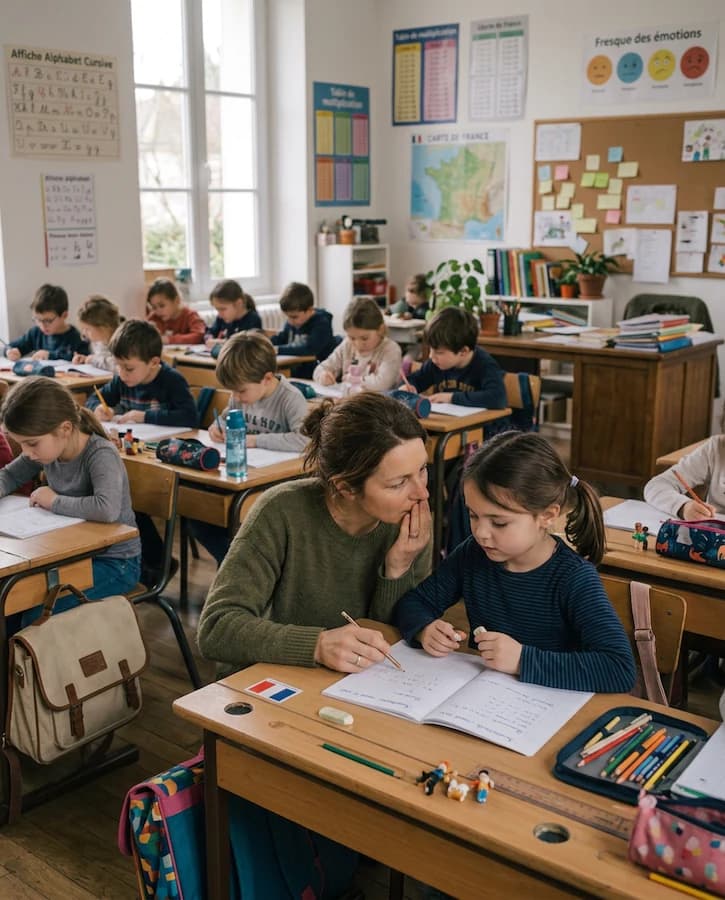
Relationships between children often require understanding what is only partly said, joining an established group, or adapting when an activity changes. Learning these skills varies greatly.
Observing specific moments helps distinguish a general difficulty, a new situation, a lack of opportunities, or a particular relationship context.
Peers and groups
Relationships and group activities are experienced very differently from one child to another.
What can be observed
A parent may notice how their child joins an activity, responds to an invitation, keeps an exchange going, reacts to a misunderstanding, or talks about their day. The same questions can usefully be asked at school when the setting can be observed.
Avoid concluding that a child does not understand others from a single episode: an argument, an unfamiliar rule, or a difficult day may be enough to explain a mismatch.
Adults and peers: two different situations
A child may seem very comfortable with adults and more hesitant with children their own age, or the reverse. Adults may provide more structure in conversation, explain rules, or follow the child's interest.
This difference is a useful observation to describe, without treating it as proof of ASD.
Joining an activity already underway
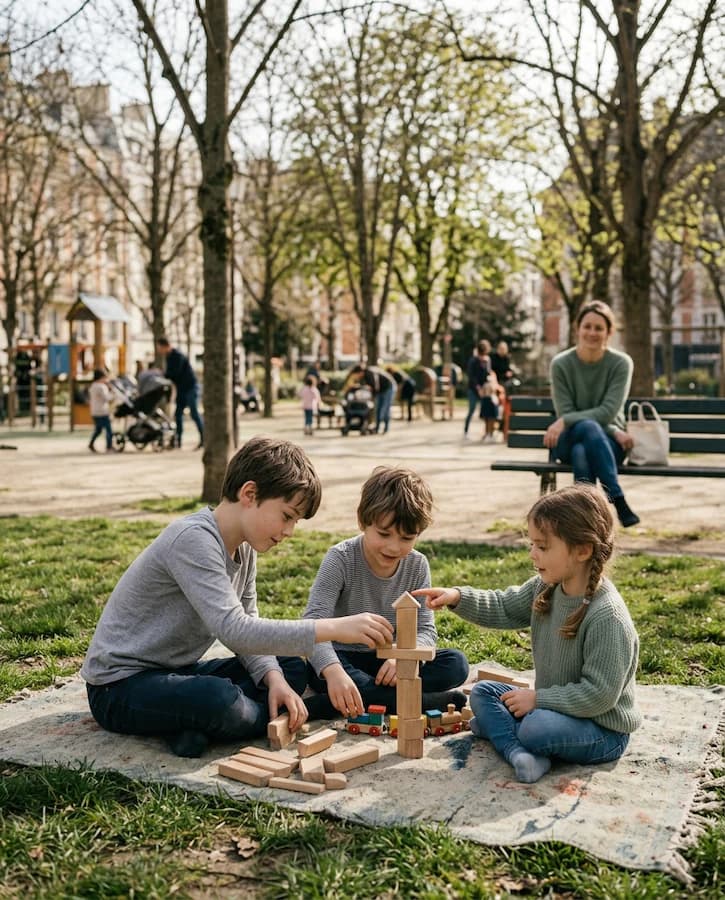
Joining a game or conversation often means noticing what is happening, finding a moment to approach, and understanding rules that have not been explained. In younger children, this may appear in a playground game, a building activity, or an invitation to take turns. In teenagers, the same difficulty may arise in a group chat, project, or sports activity.
Some children join more easily when an adult introduces the game, a peer invites them, or they already know how the activity works. Others prefer to watch for a long time before trying. These approaches are not necessarily problematic; they become useful to explore if the child wants to participate but cannot, or if the situation regularly causes distress or conflict.
- Who initiates contact, and how does the child respond?
- Are the rules of the game or each person's role clear enough?
- Does the child have a simple way to ask to join the group?
Keeping an exchange going without assuming how the child feels
An interaction goes beyond initial contact. It involves responding, waiting, resuming after an interruption, noticing another child's change of topic, or saying something is unclear. A young person may want to talk at length about an interest, answer very briefly, interrupt through enthusiasm, or lose track when several people speak. A specific situation helps clarify what is happening.
Children's conversations include many implied meanings, shared references, and quick changes. A misunderstanding may relate to language pragmatics, attention, shyness, anxiety, or an unfamiliar group rule. The most useful question is not “Does the child understand others?” but “What did they understand in this situation, and what help would they have needed?”
- Identify settings with one person or several people.
- Distinguish a chosen exchange from a forced or mocking conversation.
- Value communication methods that suit the child.
Disagreements, unspoken rules, and repairing a misunderstanding
Disagreements are part of relationships. They can become difficult when a child does not notice a peer is joking, does not understand why a rule changed, or does not know how to reconnect after an argument. It helps to separate the conflict itself, understanding its cause, how the child asks for help, and what adults offered.
A child who becomes angry, falls silent, or leaves the group is not necessarily unable to understand others. They may be overwhelmed, tired, hurt by a remark, or struggling to find words. Afterward, a calm conversation, drawing, message, or adult mediation can sometimes help organize what happened without forcing the child to relive it.
- Describe facts without assigning intentions to the child or peers.
- Arrange access to a trusted adult when conflicts recur.
- Look for a way to repair the situation that fits the child's age and wishes.
Comfort with adults does not tell the whole story about peer relationships
Adults often structure conversations more: they ask questions, allow time, explain rules, and follow the child's chosen topic more readily. A young person may therefore be very comfortable with an adult and more hesitant with children their age. The reverse also happens. This difference is information to describe, not proof in itself.
Opportunities also matter. A child who changes schools, lives in a small village, does few group activities, or has experienced exclusion may not have the same starting point for forming connections. Before concluding that they lack social interest, check whether they have had access to safe, respectful interactions compatible with their preferences.
- Compare settings without classifying the child as “sociable” or “unsociable.”
- Ask which adults and peers help the child feel confident.
- Take every mention of teasing, fear, or exclusion seriously.
Create chosen, accessible opportunities for connection
For some children, a structured activity, small group, short meeting, or shared interest makes connections more accessible than a crowded recess. For others, the best support is permission to take a break or say no. Success is measured not by the number of relationships but by being able to participate without becoming overwhelmed and to find respectful relationships.
Parents and schools can consider a specific setting: preparing an invitation, offering a role in an activity, explaining a game rule, pairing the child with a willing peer, or choosing a quieter time. These trials should remain reversible and be discussed with the child. Their purpose is to expand choices, not normalize behavior.
- Start with an interest or activity the child enjoys.
- Prefer a short trial to forced social exposure.
- Review it with the child: what was enjoyable, neutral, or too difficult?
Friendships do not all follow the same pattern
Some friendships develop around a particular activity, others around frequent conversations or a stable group. A child may prefer one close relationship to several acquaintances, or need long periods alone between meetings. These preferences do not, on their own, show whether a relationship is satisfying or whether the child lacks connection.
It can help to ask what the young person wants from friendship: playing, sharing a passion, talking regularly, being at ease with someone, feeling defended, or being able to stay quiet. Adults can then avoid measuring social success against standards that do not fit the child's preferences. A chosen, respectful relationship matters more than forced participation in a group.
In adolescence, group codes, messages, social networks, and invitations may make expectations even less explicit. A young person may need to clarify a situation with a trusted adult without that adult taking control of all their relationships. The most appropriate help supports their agency and safety.
- Do not use the number of friends as the only measure of well-being.
- Respect the child's relationship preferences.
- Identify situations where the child would like more connection or protection.
Protecting a child when a relationship becomes unsafe
A relationship difficulty should never be used to minimize teasing, exclusion, violence, or bullying. If a child describes fear, insults, pressure, content being shared, imposed isolation, or actions that make them uncomfortable, the priority is to believe them, protect them, and involve the appropriate adults through the relevant channels.
The context may be complex: the child may struggle to explain, fear retaliation, minimize the situation, or react in a way others do not understand. These factors do not reduce the need to act. Adults can gather facts, preserve useful information, and contact the school or appropriate services without making the child responsible for proving what happened.
After a negative experience, later relationships often become harder. It may be necessary to gradually restore a sense of safety through short meetings, a chosen activity, or a trusted adult. Rebuilding this takes time; it is more than encouraging a child to return to a group immediately.
- Take any sign of fear, humiliation, or exclusion seriously.
- Seek institutional or professional help appropriate to the level of risk.
- Protect the relationships and activities where the child actually feels safe.
Cereya Child Autism Test
A tool for describing situations without labeling the child
The Cereya questionnaire helps organize everyday observations from the past three months.
It neither confirms nor rules out ASD. It can support a conversation with the child, school, or a professional when that seems useful.
- a questionnaire completed with a parent or legal guardian
- room for the child's perspective, depending on their age
- observations organized by setting and area
- descriptive feedback, without a diagnosis
Initial summary included, with detailed analysis available afterward.
Peers and groups
Relationships and group activities are experienced very differently from one child to another.
FAQ
Frequently Asked Questions
Can a sociable child have social difficulties?+
Yes. Being drawn to others or having friends does not prevent difficulties with unspoken rules, conversations, or groups. Relationships cannot be reduced to the number of friends someone has.
Does difficulty with peers necessarily mean ASD?+
Relationships depend on age, opportunities, personality, classroom context, and experiences such as bullying. They should not be interpreted without these factors.
Can a child with a friend still have difficulties in groups?+
Yes. A close relationship and a large group do not always require the same adjustments. Pace, unspoken rules, the number of people, changes of activity, or how to join a conversation can greatly change a child's experience.
How can we distinguish chosen solitude from unwanted isolation?+
There is no single sign. It helps to ask what the child prefers, whether they have opportunities to see peers, how they feel at those times, and whether they avoid a situation by choice, through fatigue or fear, or after negative experiences. The school's perspective can add to this conversation.
Can peer difficulties be related to bullying?+
Yes. Teasing, exclusion, a controlling relationship, or fear of a group need to be taken seriously in their own right. They can affect any child's behavior and should not automatically be explained by the child's functioning or possible ASD.
Should a child be pushed to participate more?+
The goal is not to make every child sociable in the same way. It may be more useful to find a chosen opportunity, a predictable format, a familiar peer, or a clear role, then review with the child what actually works for them.
References and resources
This guidance is an educational synthesis of the recommendations and research cited below. It does not reproduce clinical criteria, tools, or protocols.
- Haute Autorité de Santé (2026) — Autism: new recommendations for infants, children, and adolescents.
- Haute Autorité de Santé (2026) — ASD: interventions and life pathways for infants, children, and adolescents.
- NICE CG128 — Autism spectrum disorder in under 19s: recognition, referral and diagnosis.
- Hyman, S. L., Levy, S. E. & Myers, S. M. (2020). Identification, Evaluation, and Management of Children With Autism Spectrum Disorder. Pediatrics, 145(1), e20193447. DOI: 10.1542/peds.2019-3447. PMID: 31843864.
- World Health Organization — ICD-11: autism spectrum disorder, classification framework.
- Cordier, R., Parsons, L., Wilkes-Gillan, S., Cook, M., McCloskey-Martinez, M., Graham, P., Littlefair, D., Kent, C. & Speyer, R. (2023). Friendship interventions for children with neurodevelopmental needs: A systematic review and meta-analysis. PLOS ONE, 18(12), e0295917. DOI: 10.1371/journal.pone.0295917. PMID: 38096327.